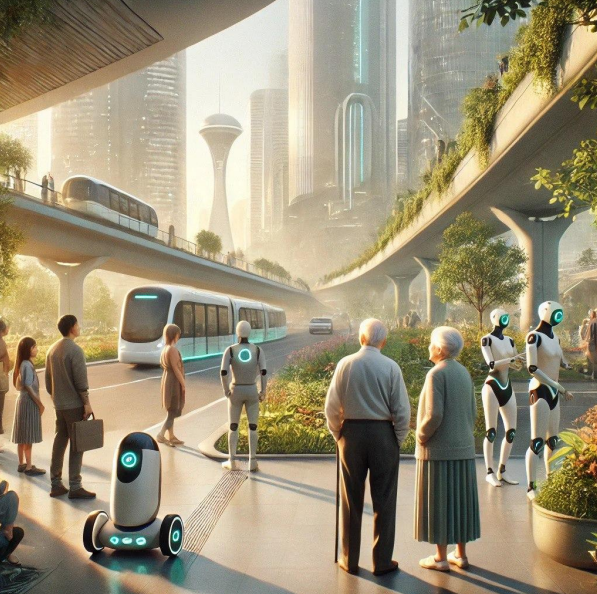
„Wie sieht die Welt 2045 aus?“ Diese Frage wurde in einem Workshop im Rahmen des Tandemkurs 2024/25 diskutiert. Basierend auf eigenen Werten und Interessen machten Teilnehmende eine mentale Zeitreise in die nahe Zukunft. Die Grafik ist das Ergebnis des Lerners Hooman mit der Zielsprache Englisch, der Text wurde im Nachhinein vom ihm verfasst.
Bildquelle: Die Grafik wurde mit DALL·E, einem KI-gestützten Bildgenerator, erstellt.
When I closed my eyes and imagined the year 2045, several thoughts came to mind. I particularly thought about my parents, who would be older by then, living in this futuristic world. I worried about how they might adapt to such a high-tech and potentially alienating environment. I envisioned that much around us would become more modern and technologically advanced. People might have grown accustomed to the conveniences of technology, and I imagined many might even appear a bit heavier—perhaps because daily life has become so comfortable due to robots and advanced technologies. In this future, machines and robots perform most tasks. While this makes daily life easier, it also fundamentally changes how we live. It raises questions about how our interpersonal relationships and health might evolve when so much is taken off our hands. These reflections emphasized the importance of keeping the needs of older generations in mind in a modern world. It’s crucial to find a balance between progress and humanity, creating a future where everyone, young and old, feels included and comfortable.
Im Englischkurs Speaking and Pronunciation haben die Studierenden einen Podcast zum nachhaltigen Reisen aufgenommen. Der Beitrag entspricht dem Sprachniveau B1 und ist ein Original aus dem Sprachkurs.
Pollution, depletion of natural resources, waste production – travelling is often seen as detrimental to the environment. Is there a way to avoid this negative impact? How can you travel more sustainably? Having read this article published in The New York Times in class, students from the course English Speaking and Pronunciation B1 recorded a podcast episode in which they gave insights into their personal travel habits and provided tips for more sustainable travels. Listen for yourself!
What are your personal travel habits? Where and how often do you like to travel? What means of transport do you use to get to your destination?
Do you have any tips for travelling more sustainably?
What role does politics play when it comes to promoting sustainable travel?
It’s your turn! What can you as a listener do?
We would love to hear your opinion!
Have you changed your habits to make your travels more sustainable?
What are your personal tips?
How can sustainable travel be encouraged on a larger scale?
Write a comment and share your opinion with us!
Du interessierst dich für das Thema und würdest gerne weiterlesen?
- In diesem Artikel vom Umweltbundesamt erfährst du mehr über die Bedeutung des Tourismus und die damit verbundenen Umweltrisiken: Nachhaltiger Tourismus
- Die Art und Weise, wie wir von A nach B kommen, hat einen besonderen Einfluss auf das Klima. Hier findest du Informationen dazu, wie Mobilität in Zukunft umweltfreundlicher gestaltet werden soll: Nachhaltige Mobilität
- Du suchst weitere Tipps, um nachhaltiger zu reisen? Dann schau hier vorbei: Nachhaltiges Reisen
In our English B2.2 class, we talked about Lauren Singer, a trailblazer in living a zero waste lifestyle. She hardly produces any trash and feels better than ever doing so! The course participants wrote texts about how to make our homes, our uni or our town more sustainable and you will find an example from Carlotta, one of the participants in the course, here. Carlotta has been living a vegan, zero waste lifestyle for a while now. She wrote the text not only in English, but in her first language Italian, too. In her text, Carlotta takes you on her journey to a „new her“ – have a look and get inspired
Everyone has their own story to tell. Yours is never the same as mine, because everyone has their own past which, together with the people we meet on our path and the experiences we have in life, make us who we are, a bit like a tree that, depending on where it grows, the nourishment it receives, the sun, the climate, the vegetation surrounding it, make it what it is: unique. My story is also unique. My approach to veganism has no environmental, medical, health, socio-economic or religious motivations, it was not a process initiated by the awareness of all the things mentioned before which then matured over time to lead me to choose a zero-waste lifestyle, but simply a challenge that I decided to take on for myself in order to be able to know myself and understand how easily I could give something up, how strong my mind could be in overcoming those everyday needs, thus freeing me free from some needs, such as the need to eat meat in my case. And here I am, talking briefly about my victory, as I am still happily vegan after twenty-five years, proud to have sought this change that helped me discover a world where I feel more aware and present. That’s why I feel that sharing this story of mine is important: it is the story of a long journey that began almost by chance and grew with me slowly, because I hope that others can understand the impact that our actions have on everything around us, and that a choice for one can be an imposition for others. I will explain myself better with an example; perhaps we rarely consider the fact that the choice of a vegetarian or vegan diet is synonymous with ecological sensitivity, we see it from the point of view of a personal, individual choice, and never as a choice made for the community, to preserve the environment in which we live and guarantee it for future generations, which is anything but a choice of an I, but of a WE. It is a choice for all of us, though. Awareness, love for the environment and my hatred for consumerism are the origin of my choice of a zero-waste lifestyle, which leaves us free to choose and feel like thinking, living beings and not numbers as the corporations would like us to be. Approaching this lifestyle choice for me was like seeing the light, like opening my eyes for the first time, and realising how many beautiful things surround us, to realise that the things making us happy are already there beside us at zero cost, we just have to take care of them in order to be thankful and to be able to see them, to act in order to be worthy of ‚owning‘ them: a sunset, a hug, the sun, the horizon, freedom; that freedom I had tasted with my journey to veganism was there again, but with another awareness and maturity.
Now it’s your turn: Who inspires you? Do you know or follow people who changed their lives just like Carlotta and Lauren Singer did? Write a comment and share your opinion with us!
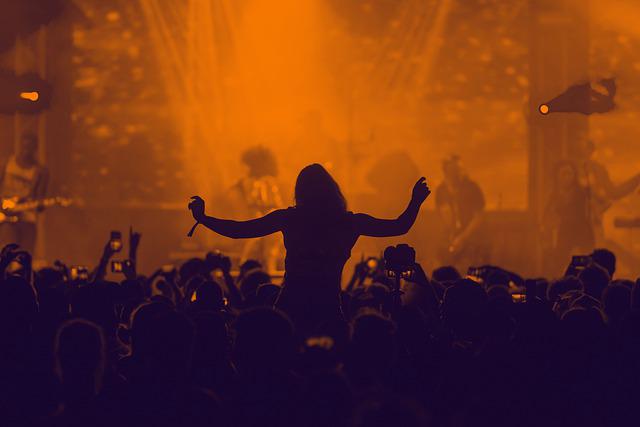
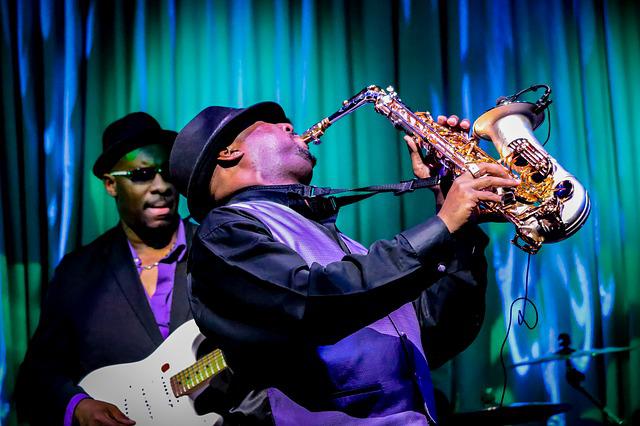
Dieser Beitrag zeigt zwei Präsentationen von Studierenden aus dem Kurs “English for students of POP” zu Themen der Nachhaltigkeit in der Musikindustrie.
As part of the Pop and Media students’ final grade for their English course, they had to present a band/event/person who/that has made an impact to the environment. The students researched deeply into this topic and the overall quality of their presentations (and English) was really good! Well done! They managed to think about industry-wide changes, about changes to fans’ behaviour, about pressuring governments, as well as the consequences of acting sustainably, while applying statistics and comparing to similar artists/events/projects.
Below are a few copies of presentations, two of which are accompanied with a short interview from the students detailing what they researched and learned.
Das Glastonbury Festival of Contemporary Performing Arts ist das größte und bekannteste Festival in Großbritannien. Finde hier heraus, was im Zusammenhang mit dem Festival für die Umwelt getan wird und was du als Festival-Besucher:in tun kannst. (Referenten: Simon Lehrer und Linus Koch)
Jack Johnson ist ein hawaiianischer Musiker, der seine Popularität für den Schutz der Umwelt nutzt. Finde heraus, wie er sich engagiert und warum er das Thema Umweltschutz in die Musik trägt. (Referent:innen: Christian Egermann, Jana Ovsjanka und Linnea Schimanke)
Du bist dran! Teile uns deine Meinung und deine Ideen mit und schreibe einen Kommentar!
Warst du in diesem Jahr schon auf einmal Festival oder Konzert und hast besondere Aktionen für den Umweltschutz miterlebt?
Welche weiteren Maßnahmen in Sachen Nachhaltigkeit kannst du dir vorstellen, um sie bei großen Veranstaltungen umzusetzen?
Kannst du dir noch andere Bereiche vorstellen, in denen Einzelpersonen oder Gruppen mit ihrer Popularität für das Thema aufmerksam machen können? Kennst du bereits andere Menschen, die sich öffentlich engagieren?
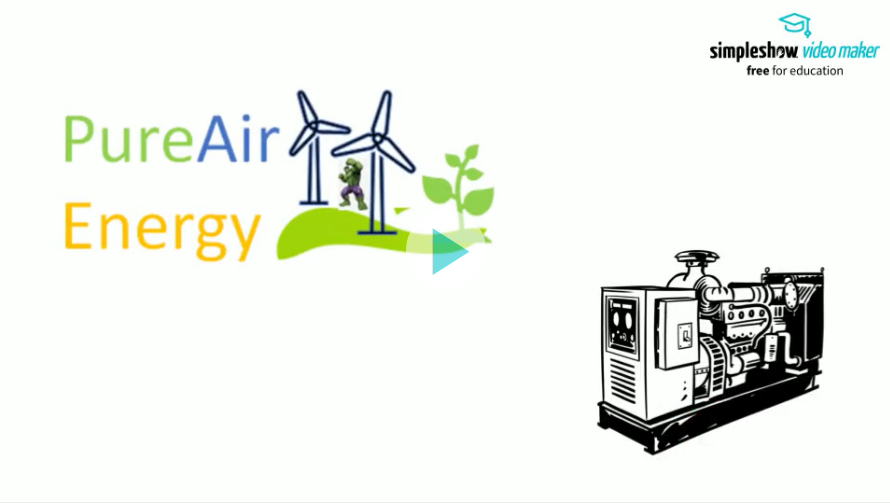
PureAirEnergy und EnAirgy wurdenvon Studierenden des Kurses „English for EngineeringStudents“ (B2+) am ZfS gegründet. Diese fiktiven Unternehmen sind Entwickler und Hersteller von nachhaltigen Windkraftanlagen. Jede Komponente der Windkraftanlage hat ein eigenes verantwortliches Scrum (Vorgehensmodell) für die Entwicklung. Als erste Teambildungsübung werden die Studierenden aufgefordert, eine Mysimpleshow zu erstellen, die ihre jeweilige Komponente und ihren Beitrag innerhalb des Unternehmens beschreibt. Das Ziel dieser Übung ist es, den Mitgliedern des Scrum-Teams die Zeit zu geben, sich gegenseitig kennen zu lernen. Sie bietet den Studierenden auch die Möglichkeit, das allgemeine Kursziel zu klären.
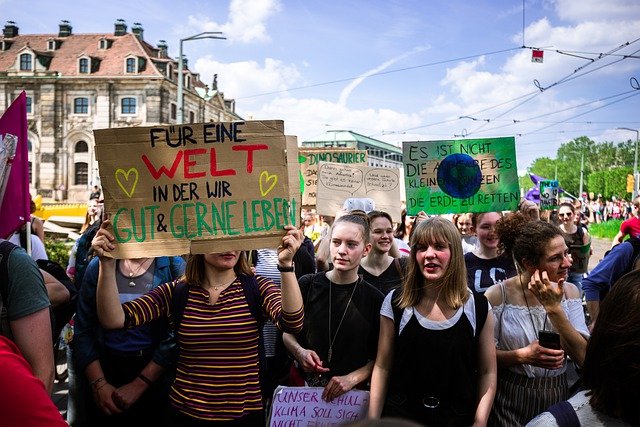
In diesem Beitrag äußern sich Studierende des Kurses Englisch C1.2 zu der Frage, inwiefern Hoffnung und die Bereitschaft zu Handeln zusammenhängen. Sie lasen vorab den Artikel aus dem Time Magazine „The Enduring Hope of Jane Goodall“ von Clara Nugent. Goodall ist 87 und seit ihrer Jugend Aktivistin.Der Beitrag entspricht dem angegebenen Sprachniveau und ist ein Originaltext aus dem Sprachkurs.
„In fact, every action is motivated by hope otherwise there is no sense in trying to make an impact. The commitment seen in activism indicates it truly being motivated by hope intrinsically.“
emily strickhausen
„Especially in recent years, the presence of activists has become more prominent through television and social media. The hope of being able to change something positively plays a major role here. For example, the friday for future protests have been launched especially by young people and are experiencing a great resonance all over the world. More and more people can identify with the belief that it is possible to shape the future better so that later generations will find a planet worth living on. Through this belief, there is the possibility of really being able to change something and thus to influence the policies of states. Without the belief to be able to make a difference nothing would ever change and who would want to live in such a world?“
florian mann
„Hope in activism is the belief that what mankind does about a certain cause might matter, regardless of the fact that the future is unpredictable, and that history may not turn as one wished or hoped for. It is the awareness that everyone, young or adult, can play an important role to get things done, to change those things that does not reflect someone’s political or social beliefs, way of think or live. It is gathering people around the world to march on the streets for the same cause. It is, sometimes, the use of strong actions in support or in opposition to one side of a controversial issue to achieve a common goal.“
stefanie monaco
„That hope might be to build a better world or to make friends. Hope is an intrinsic motivation. Studies suggest that intrinsic motivations make people take actions in more cases than extrinsic motivations.“
Björn Beckendorf
„It is necessary to take an effort to act. In addition, acting might contain risk. Activists see hope as a reason to take the risk and effort.“
Finn böker
„Hope can even be seen as a motivation to get active. One of the currentlyworld wide known activists of our time is Greta Thunberg. She started the Friday for future movement and she strikes for many years for a better climate policy and even when she gets frustrated that politics are still doing so little. The hope to change something is still pushing her to be an activist.“
natalia hoffmann
„Hope in general is a powerful tool for survival and one that is not just an opposite to fear, nor is it something working against fear. Hope is a motivator that pulls people continuously further towards a goal and as for activism this is crucial to continue in a long-term sense, like in Jane Goodall’s case.“
lucas quehl
„Hope can be distinguished from the concepts of optimism and pessimism because one may understand it as a feeling that although humans do not know what will happen in the future, because the future is unpredictable, they are able to write it themselves by taking action. […] Therefore, activists can benefit from hoping that their actions make a difference, because otherwise, it would be easy to lapse into apathy and passivity and their intrinsic motivation might get lost. This supports the assumption, that activism can not exist without hope.“
hannah kettrup
„The arriving for opportunities to take actions into your own hands to improve the present or future is needed to be seen. A possibility to rise the chance of seeing opportunities and acting on them is hope. […] Futhermore, being hopefull will rather put the focus on positive thinking instead of negative thoughts, which supports to set the mind in the right direction for taking actions.“
sarah schiemann
Now it’s your turn! Do you think hope is the motivation to be active? In which other areas of life do you think hope makes people do things? Do you know any other initiatives in Paderborn? Would you recomend to be activ here? Write a coment and share your opinion with us! You don’t know any project in Paderborn? Have a look in the box below!

Schreibe einen Kommentar